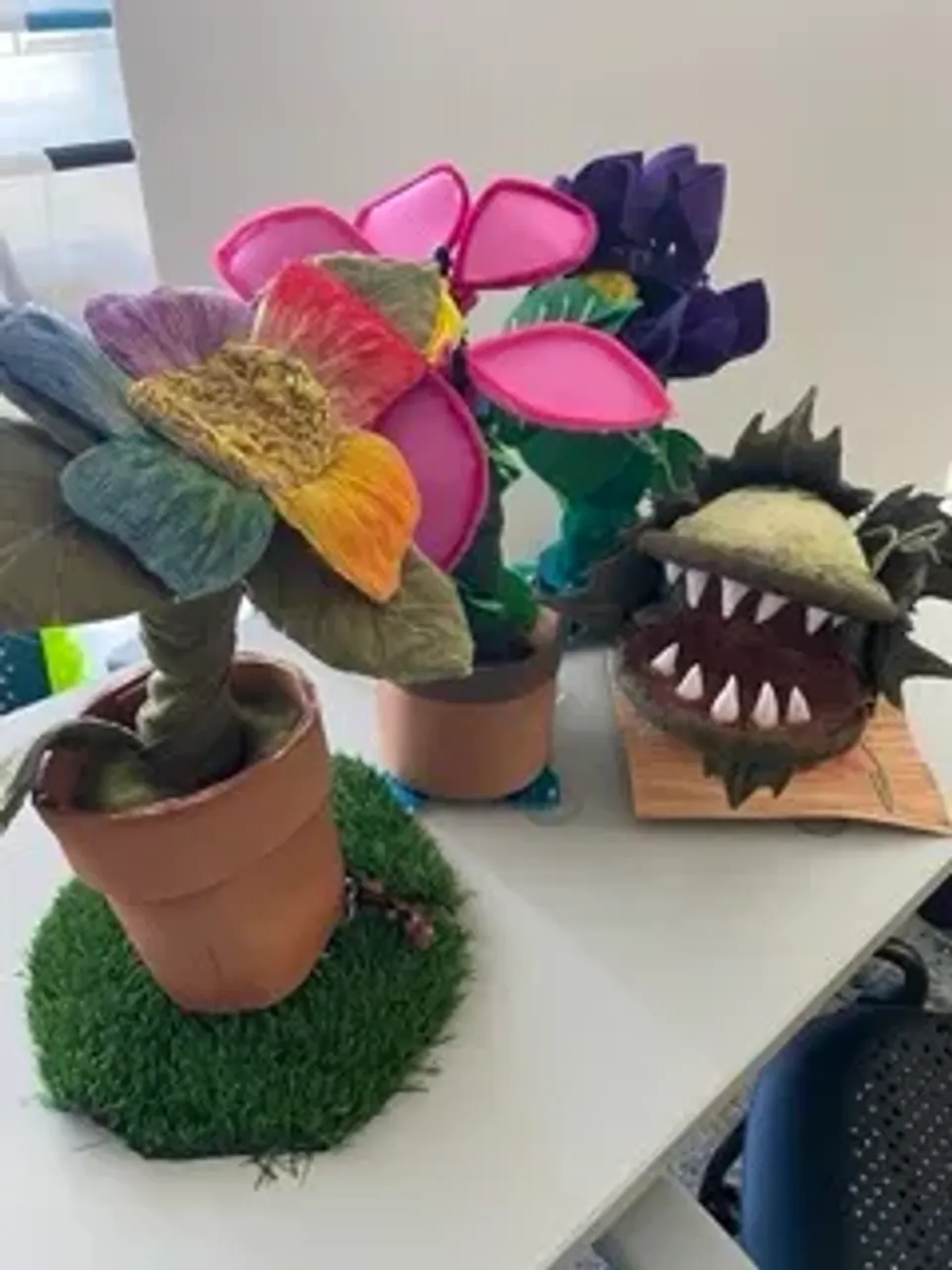
AI-Driven Robotic Flower
AI-Driven Robotic Flower
Summary
Students build a smile-recognition model in Python and use it to control a robotic arm they assemble and design.
K-12 Learning Goals
Basics of ML + human-centered AI; training/testing models and using AI to control physical systems.
Undergraduates Learning
Prototype build + ongoing curriculum development/support.
Overview:
The Robotic Flower is an interactive installation that blooms when you smile — blending computer vision, TensorFlow, machine learning, and robotics into a real-time, expressive experience. Built using a Raspberry Pi, a custom-trained CNN (Convolutional Neural Network) for facial expression recognition. We use an off-the-shelf robotic arm kit that is decorated into a flower. The flower reacts to human emotion in a playful, artistic way.
Activity Details:
Focus: Build a smile-detection model and use it to control a robotic flower
Output: Trained model + working flower that blooms/wilts in real time
Skills: Python, basic ML (train/test), computer vision, Raspberry Pi, robotics + iteration
Setting: High-school classroom or lunch-time program (hands-on workshop)
Duration: ~60–90 minutes (or 2 sessions for build + train/test)